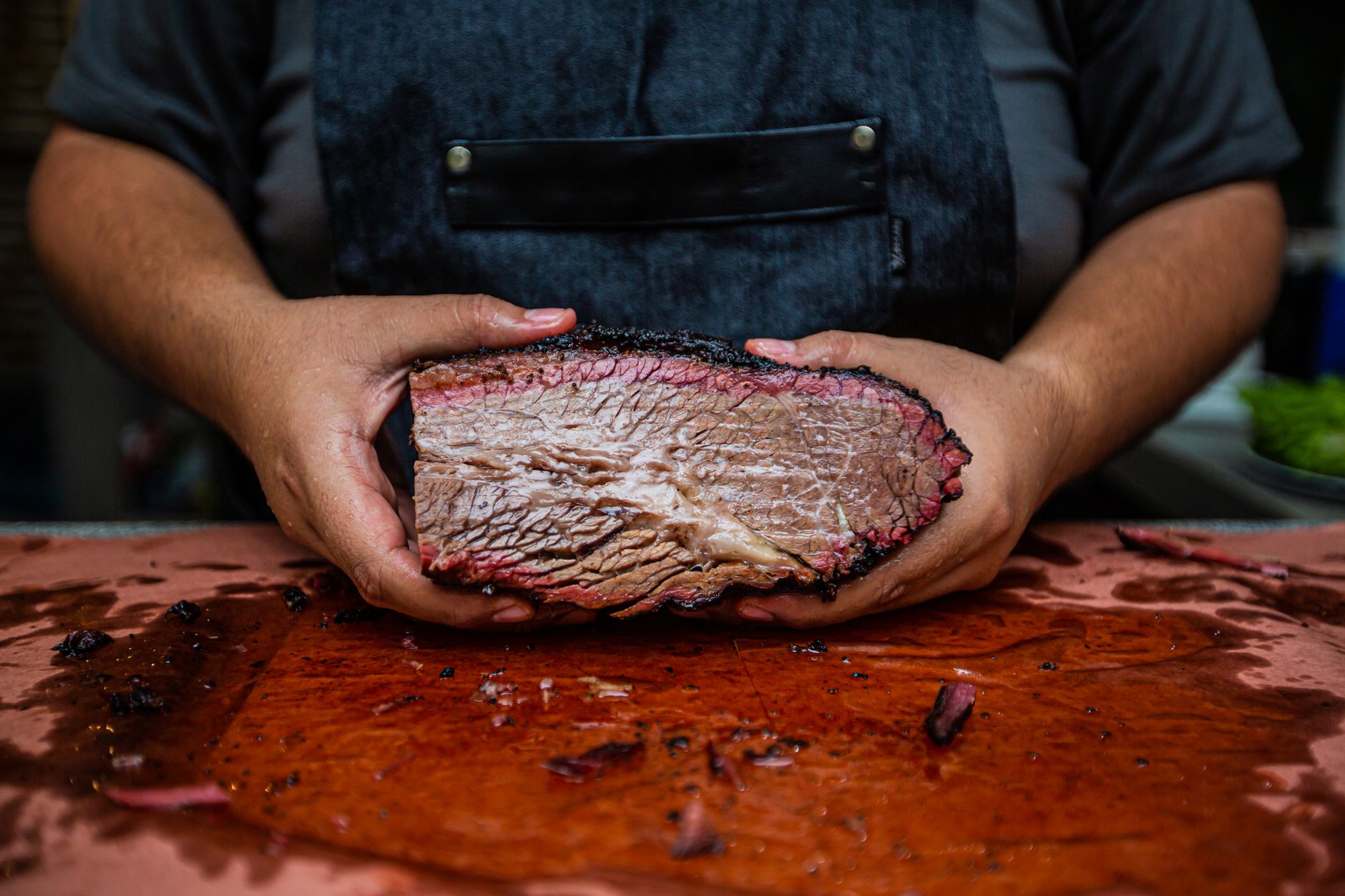
I teach middle school and run the high school bench in a town full of military families — kids who move mid-season, whose parents deploy, who show up to practice carrying more than a gym bag. My job is the same whether it's a dry-erase board, a three-man weave, or a whole packer brisket: set the fire low and steady, and get out of the way while the process works.
You'll find no recipes for shortcuts here. Everything I put up is the long version — the one that respects time, heat, and a kid's own pace. Pull up a chair.
A short film — fifty-five seconds — about why the same clock runs over a brisket and a basketball game. Four quarters, each its own fire; and a bark that's just patience with a crust on it.
One craft, two kitchens. I shot it as a slow warm painting of smoke and low light, because that's how the hours actually feel at 2 a.m. tending the fire.
Watch the film Source repoThe whole companion piece — the rub as a ratio, not a rule. Three blends, exact grams, the failure modes, and the two hours you should keep your hands off the meat while the salt does its work. Same philosophy as coaching defense: don't overhelp.
Open the field guideThe kids who arrive in November having played three defensive systems in four towns. A decade on a Fort Cavazos-adjacent bench taught me how to catch them up — and what the transfer teaches the rest of the roster.
First rule of a mid-season transfer: don't teach. Ask. Everything else is patience with a game clock on it.
Read the essay
The bark you can hear before you can see — the whole neighborhood knows when the 225° has been running since midnight.
The rub ratios
Before the kids arrive it's just wood, light, and lines. The quiet practice is where the game gets built — bark by bark.
The four quartersFolks in this town doing the same slow work, their own way. I learn something every time I stop scrolling long enough to watch.